
 Home
Home  New products
  Promotions
  Contact Us


 Promotion
 Greenhouses


 Seeds
Seeds


 Grow tents


 Grow Lights


 Ventilation and Climate


 Roothold and growing media


 Soil and Pots


 Nutrients and Supplements


 Hydroponics and Irrigation systems


 Timers and Controllers


 Measuring devices


 Scissors and Trimmers


 Machines and Devices


 Aaccessories


 Presents



Aji Verde - 15 pcs. seeds
Aji Verde is a traditional Peruvian chili pepper, Capsicum baccatum , which is still grown along the northern coast of Peru, especially in the Lambayeque and Piura regions . It produces wrinkled, relatively wide and pointed fruits 6–10 cm long, which are usually picked green, but turn red and orange - red when fully ripe. The pepper is very mild – 1,000–1,500 SHU , making it excellent for fresh consumption and homemade sauces.
-
Code:207698
-
Weight:0.030 Kgs
Quick Buy


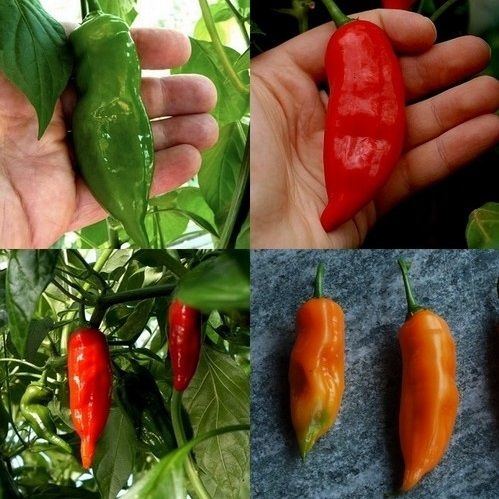
Aji Verde is an interesting Peruvian variety with a long local tradition. In its homeland, it is often grown as a large perennial plant in home gardens , and the fruits are usually harvested while still green.
The mild spiciness allows the flavor of the pepper itself to remain at the forefront. In Peru, the fruits are traditionally eaten raw or used to make sauces .
Characteristics of the variety
- Bulgarian name: Ahi Verde
- Original name: Aji Verde
- Botanical species: Capsicum baccatum
- Origin: Peru
- Traditional regions: Lambayeque and Piura
- Hotness: 1,000–1,500 SHU
- Fruit length: 6–10 cm
- Shape: Wrinkled, relatively wide and pointed
- Harvest: Usually in a green state
- Color when fully ripe: Red to orange-red
- Life cycle: Can be grown as a perennial with proper overwintering
- Main application: Fresh consumption and sauces.
🔥 Anger
1,000–1,500 SHU
Aji Verde is one of the milder chili peppers.
This makes it suitable for people who prefer a mild spicy character instead of a strong burning spiciness.
🌱 Sowing and growing
Sowing: January–April
Location: Indoors
Germination temperature: 20–30°C
Greenhouse: recommended for higher yields
Planting outside: around the end of May
Support: tall plants can be tied up
Pruning: suitable for controlling size.
An interesting feature is the possibility of perennial cultivation . In the fall, the plant can be moved to a pot and brought to a bright and protected place where it can continue its development.
🍴 Culinary app
In Peru, Aji Verde is traditionally harvested green and used raw or to make sauces.
Thanks to their low spiciness, the fruits can be used relatively generously in salsas, fresh sauces, salads, and various vegetable dishes , without the spiciness dominating the other flavors.


